

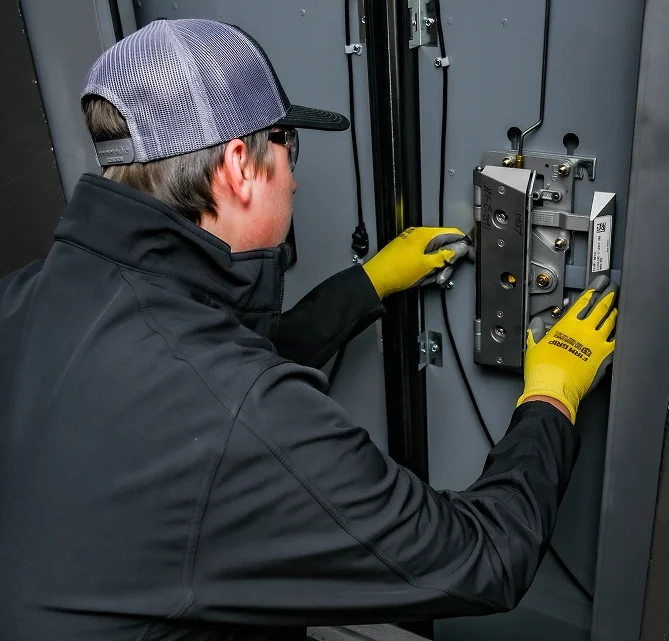


Hydraulic Elevator Repair in North & South Carolina
How We Diagnose Hydraulic Elevator Failures
The service call starts with what the elevator is doing differently. We review the failure pattern, recent callbacks, operating history, fault information where available, and any changes noticed by building staff or passengers before testing the systems tied to that symptom.
After the cause is confirmed, we explain the repair scope and the price in plain terms before any approved work starts. If the problem points toward broader equipment deterioration instead of one failed component, we can also discuss commercial elevator modernization rather than continuing a cycle of isolated repairs.
Commercial Hydraulic Elevator Repair Services
Hydraulic elevator failures can involve mechanical, hydraulic, electrical, or door components, and more than one issue may contribute to the same callback. Our repair work is built around the equipment condition and the fault we confirm on site.
Diagnose pumps that are noisy, slow, overheating, or failing to develop normal operating pressure.
Correct valve conditions that contribute to rough starts, poor leveling, irregular travel, or inconsistent stopping.
Trace oil loss around tanks, piping, fittings, cylinders, and other hydraulic components.
Address electrical or mechanical problems preventing the pump motor from starting or operating normally.
Correct conditions that leave the elevator car above or below the landing after travel.
Repair operators, locks, rollers, sensors, and related components causing shutdowns or unreliable door operation.
Diagnose relays, boards, wiring, inputs, and other controls involved in the hydraulic operating sequence.
Evaluate symptoms associated with cylinder performance, oil loss, or abnormal car movement.
Address contamination, low oil conditions, leaks, and other problems affecting hydraulic operation.
Respond to elevator failures that require immediate service outside routine scheduling.
Leveling Problems Are More Than a Ride-Quality Issue
Hydraulic elevators depend on controlled oil flow and accurate control inputs to stop the car at the landing. Worn valves, control issues, oil temperature, hydraulic conditions, or other component changes can cause the car to settle above or below floor level.
Poor leveling can inconvenience passengers and create an accessibility or trip concern. Repeated leveling adjustments without identifying the cause can also allow the underlying valve, control, or hydraulic problem to continue getting worse.
Hydraulic Leaks Need the Source Identified
Oil on the machine-room floor or around hydraulic equipment should not be treated as normal housekeeping. A leak can develop at fittings, piping, pump-unit components, seals, or other parts of the hydraulic circuit, and the location of visible oil may not be the point where the leak began.
We trace the oil path and evaluate system operation before defining the repair. That approach helps distinguish a localized fitting or seal problem from a condition involving a larger hydraulic component.
Doors Still Cause Many Hydraulic Elevator Callbacks
The lifting system may be hydraulic, but many service interruptions still start at the doors. Misaligned components, worn rollers, lock problems, operator faults, or sensor issues can prevent the elevator from completing a normal run even when the pump and cylinder are functioning correctly.
Consistent commercial elevator maintenance gives technicians more opportunities to identify those changes before they become shutdowns. Charter’s tailored maintenance plans account for equipment type, building use, callback history, and the level of service the property needs.
Repair or Modernize an Aging Hydraulic Elevator?
One failed valve, starter, relay, or door component does not automatically justify modernization. Repair can remain the right move when the rest of the elevator is in serviceable condition and replacement parts remain practical to source.
The equation changes when shutdowns become frequent, controls are obsolete, parts are difficult to obtain, ride quality continues declining, or the building is spending more on repeated corrective work without improving reliability. At that point, commercial elevator modernization can address several aging systems together instead of replacing them one failure at a time.
Hydraulic Elevator Repair FAQs
Why is my hydraulic elevator suddenly moving more slowly?
Slow upward travel can involve pump performance, motor operation, hydraulic pressure, valve condition, oil level, electrical supply, or another issue affecting the lifting cycle. The operating sequence should be tested first, so that no single component is blamed too soon.
What makes a hydraulic elevator stop short of the floor or go past it?
Leveling problems can develop from valve performance, control inputs, hydraulic conditions, or other components involved in stopping the car accurately. Repeated misleveling should be diagnosed rather than treated as a routine adjustment.
What causes hydraulic elevator oil leaks?
Leaks can occur at fittings, piping, seals, pump-unit components, cylinders, and other parts of the hydraulic circuit. The visible oil location does not always identify the exact source.
Can Charter repair an elevator after hours?
Yes. Charter offers 24/7 emergency elevator service across its Carolinas service area for failures that cannot wait for routine scheduling.
When does a hydraulic elevator need modernization instead of repair?
Modernization becomes worth evaluating when the elevator develops frequent shutdowns, obsolete controls, hard-to-source parts, repeated major repairs, or ongoing reliability problems that individual repairs are no longer correcting.
Maintenance Reduces Repeat Hydraulic Callbacks
Hydraulic elevators deserve care before something stops working. Routine cleaning, lubrication, and door service give technicians a chance to catch small changes in valves, controls, and pump units before they turn into larger repair calls.
Charter builds commercial elevator maintenance around the actual equipment and building rather than forcing every property into the same coverage. That service history also gives our repair team useful context when a new fault appears.
Rapid Response Backed by More Than 1,000 Elevator Projects
A hydraulic elevator outage can affect tenants, employees, guests, deliveries, and accessibility throughout the building. Charter Elevator has completed more than 1,000 elevator projects since 2015 and combines that field experience with rapid response and 24/7 emergency availability.
Our team handles repair, maintenance, modernization, and ongoing service across commercial and multifamily properties, which means the recommendation can account for both the immediate failure and the elevator’s longer-term condition.
Hydraulic Elevator Service Across the Carolinas
Charter serves commercial buildings in Charlotte, Wilmington, and Raleigh in North Carolina and in Columbia and Myrtle Beach in South Carolina. Whether the building is an office in Charlotte, a multifamily property in Raleigh, or a hotel near Myrtle Beach, owners and property managers can reach Charter for hydraulic elevator repair throughout our service area.
Hydraulic equipment varies by manufacturer, age, control system, building use, and maintenance history. Those differences are why our repair process starts with the elevator installed in the building rather than a preset list of parts to replace.
Call (877) 632-4278 or contact Charter online for commercial hydraulic elevator repair in North & South Carolina.